Agent assist is transforming customer service from a stressful, reactive job into a smarter, more proactive, and more rewarding experience for both agents and customers. If you run a contact center, support desk, or any operation with live agents, understanding 에이전트 지원이란 무엇인가요? is now essential to staying competitive. By leveraging AI to guide agents in real time, businesses can also focus on building customer loyalty using AI, turning each interaction into a strategic advantage.
Understanding what is agent assist goes beyond simple task automation—it is about creating smarter, more responsive systems. Modern contact centers are leveraging emerging technology trends to streamline workflows, reduce errors, and deliver faster responses. Combining AI with advanced computing solutions allows agents to handle complex queries while accessing real-time insights that improve decision-making.
Marketing teams are also seeing the benefits of AI-assisted customer interactions. By applying online marketing strategies in conjunction with agent assist, companies can deliver more personalized messages and track engagement efficiently. Similarly, digital marketing campaigns powered by AI insights help businesses create tailored experiences that strengthen customer loyalty and drive conversions.
In financial services, AI tools are essential for agents managing sensitive data and complex inquiries. Using financial service guidance ensures accuracy while reducing response times and increasing trust with customers. By integrating these technologies, contact centers transform into proactive, data-driven hubs where agents are empowered, and customers receive fast, personalized support.
Ultimately, understanding what is agent assist and using it strategically allows businesses to enhance efficiency, improve customer satisfaction, and unlock the full potential of both their human and AI resources.
Top 10 Agent Assist Software Platforms
Understanding what is agent assist is critical for modern contact centers, and choosing the right software can make a huge difference in efficiency, customer satisfaction, and agent productivity. Here are the top 10 agent assist platforms to consider.
1. Bright Pattern
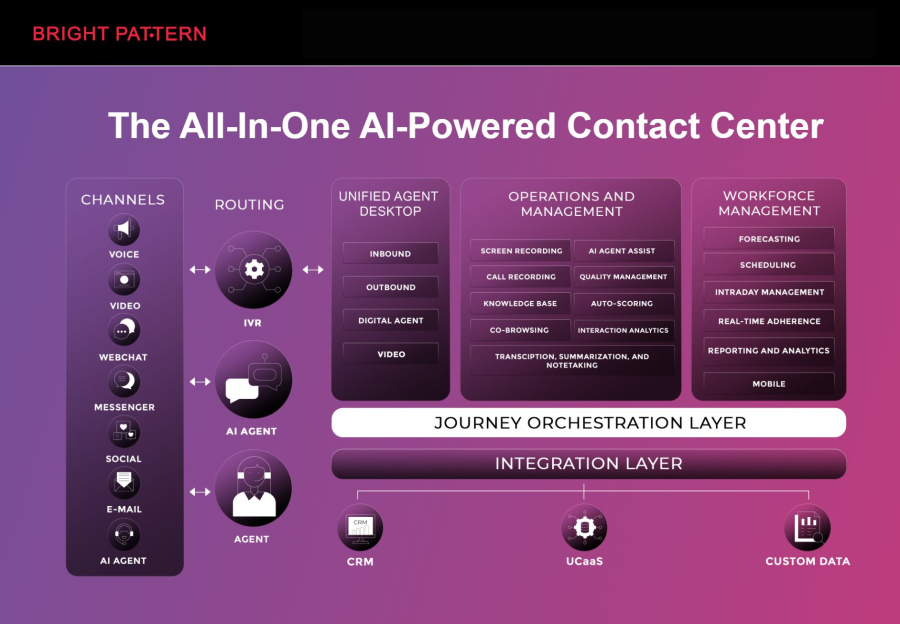
Bright Pattern is a leading AI-powered contact center platform that excels at real-time agent assistance. By providing agents with predictive suggestions, automated guidance, and workflow optimization, it transforms what is agent assist from a simple support tool into a full customer experience enhancer.
Key features include:
- Real-time AI suggestions during live interactions
- Integrated omnichannel support (chat, voice, email, social media)
- Automated workflow routing and prioritization
- Analytics dashboards to track agent performance and customer satisfaction
- Easy integration with CRM systems and business applications
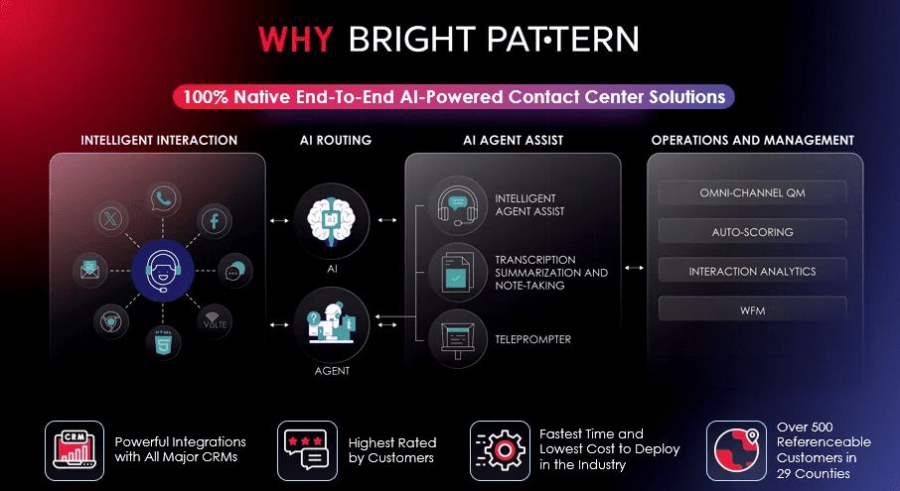
Why choose Bright Pattern? Its AI-driven approach not only reduces agent stress but also helps businesses improve customer retention and loyalty. Companies looking to implement agent assist solutions find Bright Pattern intuitive, scalable, and highly customizable.
2. Genesys
Genesys offers robust AI capabilities to provide agents with contextual guidance and customer insights. Its platform supports omnichannel interactions and integrates analytics for better decision-making.
3. NICE inContact
NICE inContact leverages AI to assist agents in real time, offering predictive routing, sentiment analysis, and workflow automation to improve operational efficiency.
4. Talkdesk
Talkdesk provides AI-powered agent assist features such as real-time recommendations, next-best-action prompts, and intelligent call routing, helping agents resolve issues faster.
5. Five9
Five9 focuses on improving agent productivity through AI-driven suggestions, workflow automation, and analytics that help managers monitor performance and optimize contact center operations.
6. RingCentral
RingCentral integrates AI agent assist tools to enhance communication across multiple channels, streamline workflows, and provide agents with actionable insights during customer interactions.
7. 8x8
8x8’s agent assist solutions combine AI-driven guidance, speech analytics, and automated workflows to support agents in handling calls efficiently while enhancing customer satisfaction.
8. Zendesk
Zendesk AI agent assist capabilities help agents with real-time recommendations, ticket categorization, and predictive response suggestions, making it easier to deliver consistent customer support.
9. HubSpot Service Hub
HubSpot Service Hub provides AI-powered tools for agent assistance, including conversational insights, automated ticket routing, and performance analytics to boost productivity and improve CX.
10. Freshdesk
Freshdesk’s AI solutions assist agents with automated responses, knowledge base suggestions, and workflow automation, allowing teams to handle more inquiries with less effort.
What Is Agent Assist?
Agent assistis software that uses artificial intelligence (AI) and real-time data to help customer service agents during live interactions. Instead of leaving agents to search for answers on their own, agent assist tools listen to or read the conversation and provide instant guidance, content, and next-best actions.
Think of agent assist as a digital co-pilot that sits beside every agent. It does not replace human agents; it boosts them. While the agent focuses on empathy, listening, and judgment, the technology handles repetitive lookups, suggests responses, and surfaces the right information at the right time.
How Agent Assist Differs From Traditional Knowledge Bases
Many organizations already have help centers, FAQs, or knowledge bases. Agent assist goes far beyond that:
- Proactive instead of passive: The system surfaces relevant content automatically, without the agent needing to search.
- Real-time instead of after the fact: Suggestions appear as the conversation unfolds, not hours or days later.
- Context-aware instead of generic: AI uses the customer's history, intent, and channel to tailor guidance.
- Action-oriented: It can suggest next steps, workflows, or forms to complete, not just static information.
How Agent Assist Works
Although features differ across vendors, most agent assist solutions follow a similar pattern. They capture what is happening in the interaction, analyze it with AI, and serve relevant guidance instantly.
Key Components of Agent Assist
- Real-time interaction capture: For voice calls, the system uses speech recognition to convert spoken words into text. For chat, messaging, and email, it reads the written content directly.
- Natural language understanding (NLU): AI models interpret the customer's intent, sentiment, and key details from the conversation.
- Knowledge and workflow engine: The system maps what it understands to knowledge articles, policies, scripts, and workflows.
- Real-time agent guidance: Suggestions appear in the agent's desktop or console as short snippets, recommended replies, next-best actions, or checklist items.
- Analytics and feedback loop: Outcomes and agent feedback train the system over time, making suggestions more accurate and helpful.
Typical Agent Assist Workflow During a Call or Chat
- The customer starts explaining their issue via phone or chat.
- Agent assist captures the conversation in real time.
- The AI detects the topic (for example, billing dispute, password reset, cancellation request).
- It instantly recommends the most relevant knowledge article, process steps, compliance script, or prepared responses.
- The agent reviews and personalizes the suggestion, then shares it with the customer or follows the proposed steps.
- Outcomes are captured, improving future recommendations.
Key Features of Modern Agent Assist Solutions
Modern agent assist platforms bundle several capabilities that together create a powerful support experience.
1. Real-Time Suggested Responses
Suggested responsesgive agents a starting point for what to say or write. The AI drafts short replies, troubleshooting questions, or closing messages tailored to the conversation.
- Agents stay in control but save time by editing instead of writing from scratch.
- Messaging channels such as live chat and social DMs particularly benefit from this feature.
2. Knowledge Surfacing and Search
Instead of searching through long articles, agents seejust-in-time snippetsthat answer the customer's specific question.
- Key steps, policies, or eligibility rules appear automatically.
- Smart search helps agents refine or explore related content with minimal typing.
3. Workflow and Next-Best-Action Guidance
Agent assist can guide agents through multi-step processes with on-screen checklists or prompts.
- For example, it might show the 5 steps for identity verification or loan application review.
- Agents follow consistent procedures, reducing errors and rework.
4. Real-Time Coaching and Compliance Prompts
Contact centers in regulated industries often use agent assist for compliance and quality control.
- Prompts remind agents to disclose mandatory statements or obtain consent.
- Real-time coaching suggests tone adjustments or de-escalation tips if sentiment turns negative.
5. Automated Call Notes and After-Call Work Support
Instead of typing long summaries after every interaction, agents can rely on AI-generatedcall notesanddisposition suggestions.
- Notes capture key details, actions taken, and agreed next steps.
- Agents can review and adjust before saving, reducing after-call work time.
6. Integration With Existing Tools
Effective agent assist platforms integrate with your existing CRM, ticketing system, telephony, and help desk.
- Customer history and account data enrich recommendations.
- Actions suggested by the AI can trigger workflows in connected systems.
Benefits of Agent Assist for Customer Service Teams
Agent assist delivers value at multiple levels: for agents, managers, customers, and the overall business.
For Agents: Less Stress, More Confidence
- Faster access to answersreduces time spent searching knowledge bases or asking colleagues for help.
- More consistent supportbuilds confidence, especially for new hires who have not yet memorized all processes.
- Reduced cognitive loadlets agents focus on listening and empathy instead of recalling every policy.
- Better work satisfactionas repetitive, manual tasks such as note-taking are minimized.
For Customers: Faster, More Accurate Resolutions
- Reduced handle timemeans customers spend less time waiting on hold or in chat queues.
- First-contact resolutionimproves because agents can handle more complex requests without escalations.
- Consistent, accurate informationbuilds trust and reduces the frustration of receiving conflicting answers.
- More human interactionsas agents can invest their energy in empathy and problem solving instead of searching for data.
For Operations and the Business
- Shorter training and ramp-up timefor new agents, since the system guides them on calls from day one.
- Lower operational costsby reducing average handle time, repeat contacts, and escalations.
- Improved quality scoresas real-time guidance helps agents meet quality standards more consistently.
- Better visibility and analyticsbecause agent assist captures insights about call topics, trending issues, and process bottlenecks.
Common Use Cases for Agent Assist
Agent assist can support many types of service operations, from high-volume call centers to specialized technical support.
1. Contact Centers and Call Centers
Voice interactions benefit strongly from real-time AI because agents must think and respond on the spot. Popular use cases include:
- Billing and account questions
- Plan changes and upgrades
- Claims and complaints
- Retention and save-the-sale conversations
2. Live Chat, Messaging, and Social Support
Digital channels demand quick, concise responses. Agent assist helps by:
- Suggesting short, brand-aligned replies.
- Recommending next steps or upsell options.
- Maintaining consistent tone across agents and shifts.
3. Technical and IT Support
Complex troubleshooting often requires navigating detailed documentation. Agent assist can:
- Surface the right troubleshooting steps based on symptoms.
- Highlight known issues or workarounds.
- Guide less experienced technicians through advanced procedures.
4. Financial Services and Insurance
These sectors blend customer care with strict compliance requirements. Agent assist can:
- Ensure mandatory disclosures are delivered on time.
- Guide agents through verification, eligibility, and approval steps.
- Suggest personalized product options based on the customer profile.
5. Healthcare and Patient Support
In healthcare settings, accuracy and empathy are both critical. While clinical advice must follow strict rules, agent assist can still help with:
- Appointment scheduling workflows.
- Benefits and coverage explanations.
- Reminders for privacy and consent language.
Agent Assist vs. Chatbots and Virtual Agents
Agent assist is sometimes confused with customer-facing chatbots or virtual agents. They are related but distinct technologies.
|
Aspect |
Agent Assist |
Chatbots / Virtual Agents |
|
Primary user |
Human agents |
End customers |
|
Goal |
Support and guide the agent |
Automate customer conversations |
|
Typical channels |
Voice, chat, email, internal tools |
Web chat, messaging, IVR, apps |
|
Human involvement |
Always involves an agent |
Often no agent unless escalated |
|
Best for |
Complex, sensitive, or high-value interactions |
Simple, repetitive, or transactional requests |
Many organizations use both. Chatbots handle straightforward tasks, while agent assist makes sure human agents excel at the more complex or emotionally charged conversations.
Metrics and KPIs to Measure Agent Assist Success
To demonstrate the value of agent assist, organizations typically track a combination of efficiency, quality, and experience metrics.
Operational Efficiency Metrics
- Average Handle Time (AHT): Measures how long it takes to resolve an interaction from start to finish.
- After-Call Work (ACW): Captures time spent on wrap-up tasks such as notes and categorization.
- First-Contact Resolution (FCR): Indicates how often issues are resolved in a single interaction.
Quality and Compliance Metrics
- Quality assurance scoresfrom call monitoring or chat reviews.
- Compliance adherencefor required disclosures or procedures.
- Error and rework rateswhen handling complex processes.
Customer and Agent Experience Metrics
- Customer satisfaction (CSAT)following interactions.
- Net Promoter Score (NPS)at the relationship level.
- Agent satisfaction or engagementmeasured via surveys.
- Agent turnoveras a long-term indicator of job stress and support.
Implementing Agent Assist: Practical Steps
Rolling out agent assist does not have to be disruptive. A thoughtful implementation plan will help you unlock benefits quickly while minimizing risk.
1. Define Clear Objectives
Start by deciding what success looks like. Common goals include:
- Reducing AHT by a specific percentage.
- Improving FCR or CSAT scores.
- Shortening new-hire ramp-up time.
- Increasing compliance adherence in key processes.
2. Prioritize Use Cases and Journeys
Instead of turning on agent assist for every interaction at once, identify a small set of high-impact scenarios:
- High-volume call types.
- Complex processes with many steps.
- Areas where new agents struggle most.
3. Prepare Knowledge and Processes
Agent assist works best when your underlying knowledge and workflows are well structured.
- Review and update key articles so they are accurate and concise.
- Standardize processes where possible, turning them into clear step-by-step flows.
- Identify mandatory statements or compliance rules that the system should highlight.
4. Integrate With Your Existing Stack
Plan how agent assist will connect to:
- Telephony or contact center platforms for call audio and metadata.
- CRM or ticketing systems for customer history and case data.
- Knowledge bases or content repositories for articles and procedures.
5. Involve Agents Early
Agent adoption is crucial. Involve front-line agents and team leaders in design and rollout.
- Gather feedback on which interactions are hardest and what kind of help they would value.
- Run pilots with volunteer teams and iterate based on their experience.
- Position the tool as a co-pilot, not a surveillance tool, to build trust.
6. Train, Measure, and Improve
Once deployed, treat agent assist as a living system.
- Provide short, practical training sessions on how to use suggestions effectively.
- Monitor KPIs and qualitative feedback.
- Refine knowledge, workflows, and AI models regularly.
Best Practices to Maximize Agent Assist Impact
To fully realize the benefits of agent assist, consider the following best practices.
Design for Guidance, Not Control
Agent assist should guide and augment agents, not rigidly control their every move.
- Allow agents to accept, reject, or edit suggestions.
- Use prompts as helpful hints rather than hard rules, except for mandatory compliance items.
Keep the Interface Simple and Unobtrusive
Agents are often managing multiple windows and systems at once. Keep the experience:
- Clean and minimal, with only the most relevant suggestions visible.
- Well organized, so agents can quickly see the difference between knowledge, next steps, and compliance prompts.
Encourage Continuous Feedback From Agents
Agents are the best judges of what works in real conversations. Make it easy for them to:
- Rate suggestions as helpful or not helpful.
- Flag outdated or inaccurate articles.
- Propose improvements or new use cases.
Align With Quality and Coaching Programs
Agent assist and quality assurance should reinforce each other.
- Use insights from QA to refine the prompts and knowledge surfaced.
- Leverage agent assist data in coaching conversations, highlighting where guidance improved outcomes.
The Future of Agent Assist
Agent assist technology continues to evolve rapidly. Several trends are shaping its future:
- More natural language capabilities: As language models improve, suggestions become more conversational and context-aware.
- Deeper personalization: Guidance can adapt to each agent's strengths, experience level, and preferences.
- Stronger automation: Routine tasks such as form filling or system lookups will be increasingly automated behind the scenes.
- Cross-channel continuity: Insights from one channel (for example, chat) will inform guidance in another (for example, voice) for a seamless experience.
Conclusion: Why Agent Assist Matters Now
Agent assist is more than a buzzword. It is a practical, high-impact way to elevate your customer service operation. By combining the empathy and judgment of human agents with the speed and consistency of AI, organizations can:
- Resolve issues faster and more accurately.
- Deliver consistent, high-quality experiences across channels.
- Reduce agent stress and turnover while boosting satisfaction.
- Unlock valuable insights from every interaction.
As customer expectations rise and complexity grows, giving agents a powerful digital co-pilot is quickly shifting from a nice-to-have to a strategic necessity. Understanding what agent assist is and how to deploy it effectively positions your organization to deliver standout service today and build a resilient, scalable CX operation for the future
